April 19, 2026 Letter

Dear Neighbors:

As we approach Patriot’s Day and hope the Red Sox can turn the corner, I will discuss this week the General Assembly’s inability to assess the climate impacts of the Governor’s energy affordability program.

A. The Act On Climate

As described in my November 30, 2025 letter, the Act on Climate provides a framework for Rhode Island to reduce greenhouse gas emissions by specific levels in 2030 and 2040, and to reach “net zero” carbon emissions by 2050 through two basic steps:

  1. Convert existing carbon-based energy consumption to electricity by 2050, and
  2. Decarbonize electricity generation by 2033.

B. The EC4’s Climate Action Strategy

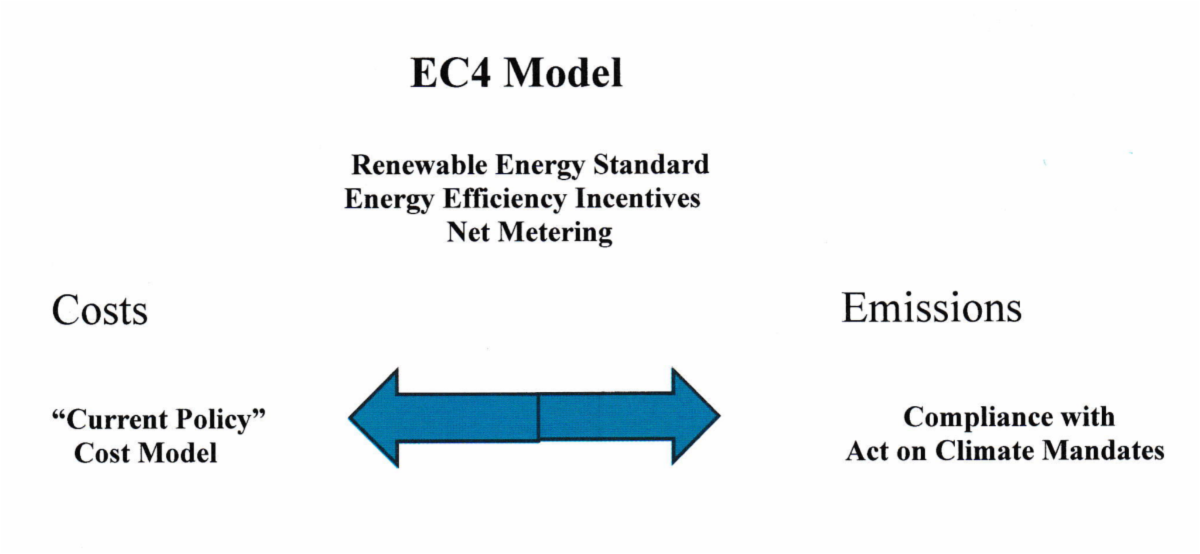
As noted in my February 1 letter, the Act on Climate established the Executive Climate Change Coordinating Council (EC4) to imiplement the Act’s emissions reduction mandates. At the end of last year, the EC4 completed a Climate Action Strategy that modeled the impact of State energy policies on both consumer costs and greenhouse gas emissions. Among those state policies are (1) the renewable energy standard (decarbonizing electricity generation by 2033), energy efficiency incentives and net metering (incentives to bring solar and wind generation online), as depicted in this graphic:

C. The Governor’s Energy Affordability Program

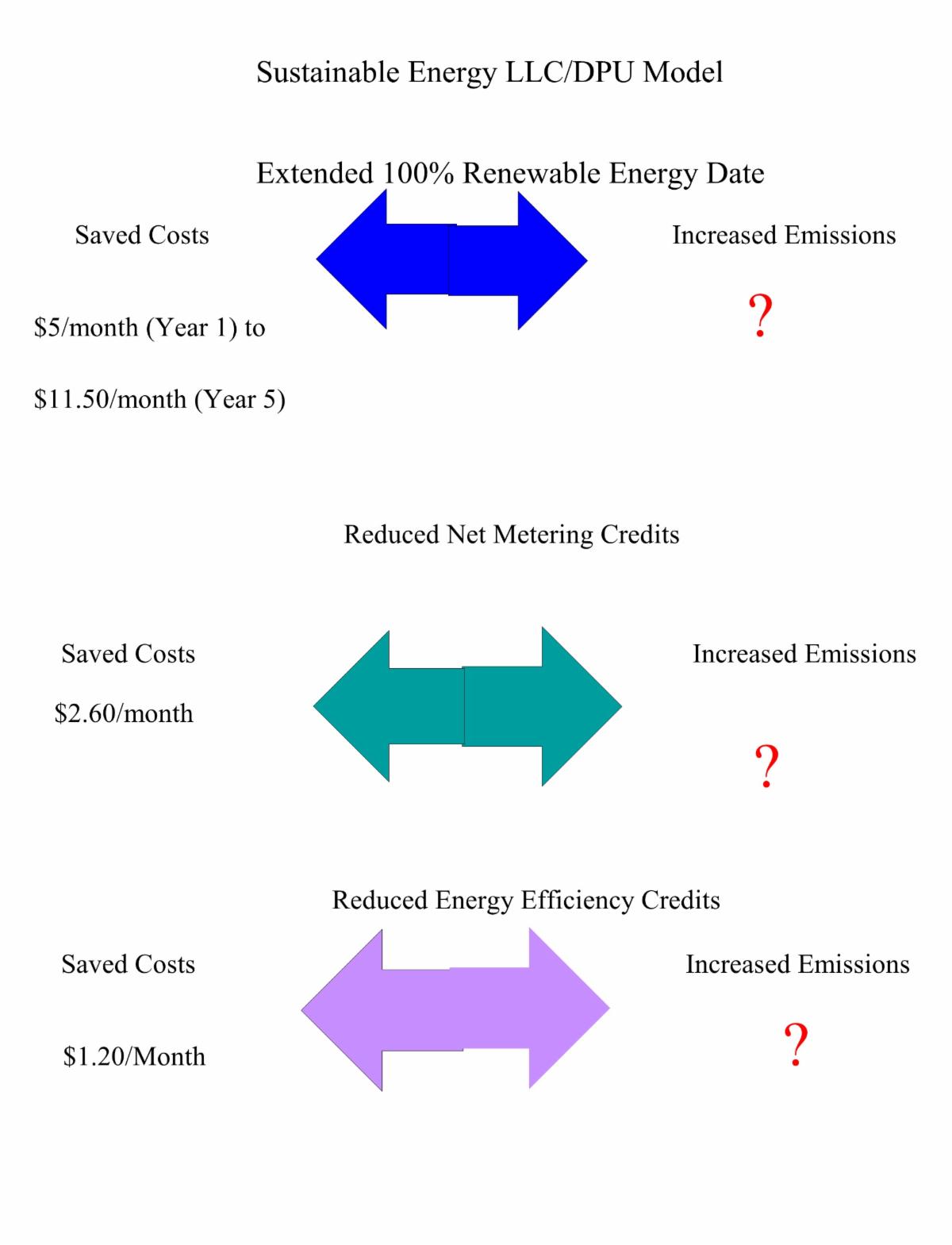
Unbeknownst to EC4, the Governor developed his “energy affordability agenda” at the same time that EC4 was completing its year-long Climate Action Strategy project. As a result, the “current policy” model the EC4 published in December was not used to project how the Governor’s “energy affordability agenda” would affect rates or emissions. The Governor engaged a consultant (Sustainable Energy LLC) to model the impact of the proposed extension of the renewable energy standard from 2033 to 2050 on rates, but not its impact on emissions. The Governor also worked with the Division of Public Utilities to consider changes in other energy policies, again without informing the EC4. The Governor combined these projects into this Presentation which modeled changes in reduced consumer costs, but did not indicate how these changes would impact the mandated emissions reductions on the Act on Climate. As a result, two weeks after the December 31 publication of the Climate Action Strategy, the Governor’s budget presentation rendered that document obsolete.

D. Limitations On The General Assembly’s Budget Review

This leaves the General Assembly in a difficult position. As noted in my February 1 letter, it is clear that the Governor’s budget will impair the implementation of the Act on Climate, but we lack a model to determine the extent of that impairment. (The EC4 model had that capability, but the EC4 lacks funding or authority in the current year budget to commission this type of review.) If the General Assembly chooses to modify the Governor’s proposals in part without rejecting them completely, we will not know how much that compromise will either (A) increase emissions from the policies currently in place, or (B) reduce emissions from what the Governor has proposed. In short, we will be “flying blind” in reviewing this portion of the Governor’s budget. It may make sense for us to pause those initiatives for a year until we can develop the capacity to analyze them through existing law.

Paid for by Friends of Sam Zurier, Samuel D. Zurier, Treasurer.

Fund Raising Policy: I accept a maximum contribution of $200 per year from these donors: (1) State employees, (2) Paid members of State boards and commissions, (3) Lobbyists, (4) Political Action Committees and/or (5) State vendors. I do not accept contributions from executives in the fossil fuel industry